
“Had truck re pinstriped, GREAT JOB.🤩”
| Monday: | 8:00 AM - 5:00 PM |
| Tuesday: | 8:00 AM - 5:00 PM |
| Wednesday: | 8:00 AM - 5:00 PM |
| Thursday: | 8:00 AM - 5:00 PM |
| Friday: | 8:00 AM - 5:00 PM |
| Saturday: | Closed |
| Sunday: | Closed |
Professional Auto Body Services
Family Owned & Operated
Serving Youngtown, AZ since 1971
Come to Koppy's Body Shop, where we treat you like we would any member of our family.

Auto Body Shop Youngtown, AZ
-

-
Koppy's Body Shop proudly provides auto body repair shop services to Youngtown, AZ and the surrounding areas!
In 1971, Ambrose Koppy started Koppy's Body Shop with the goal of providing our community with the best auto body shop with the highest customer satisfaction. Now, decades later, Koppy's Body Shop remains at the same location in Youngtown, AZ, with the same family, AND provides the same great service our customers know and love!
Using modern equipment and state-of-the-art technology, our technicians are certified and trained on the latest and best repair procedures to get you back on the road- and fast! The safety of your family is our top priority. We strive to ensure your damaged vehicle is repaired properly so that you can drive confidently and safely.
At Koppy's Body Shop, it’s important that we remain active members of our community. It is important to us to continue to give back to the community who has continuously supported us. Currently, we are involved in community-based events and groups, including Rotary and American Legion. After over 55 years in business at the same location, it’s no wonder why we love and appreciate our community so much!
-
Our Services
Auto Body Shop Youngtown, AZ
-
- Auto Body Repair
- Collision Repair
- Paint Repairs
- Alignments
- Dent Repair
-
- Dent Removal
- Full Frame Straightening
- Welding
- Scratch Removal
- Refinishing
-
- Frame Work
- Bumper Repair
- Radiators
- Towing Services
- And Much More!
LEARN MORE ABOUT OUR Auto Body Shop -
-
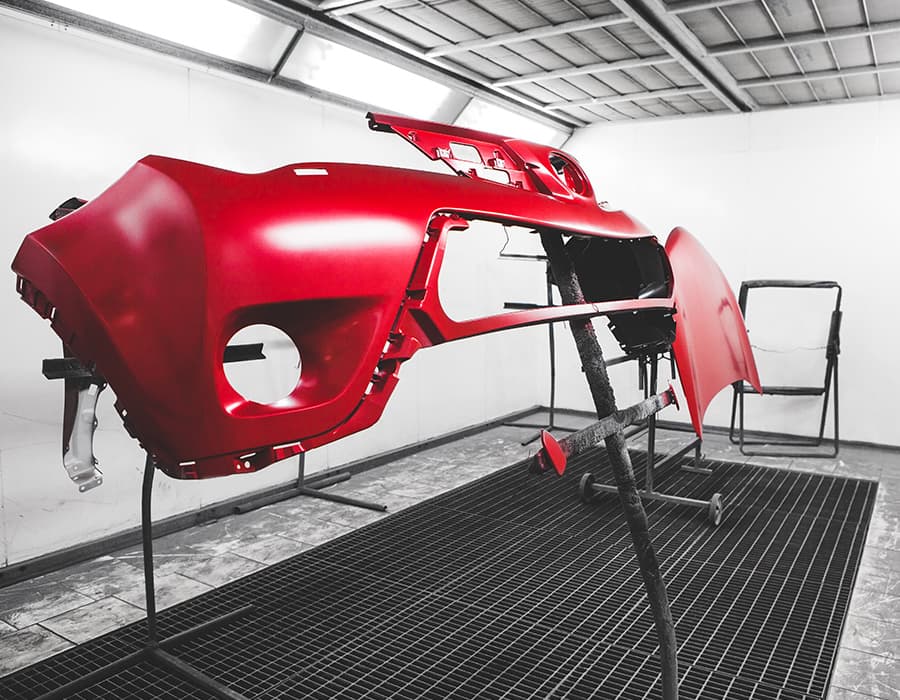
Auto Body & Collision Repair
Frequently Asked Questions
Get practical answers about accident damage, choosing a body shop, replacement parts, estimates, insurance claims, vehicle safety, completed repairs, and what to expect during the repair process.
What does an auto body shop repair?
An auto body shop repairs damage to a vehicle’s exterior and structure. That can include dents, bumpers, body panels, paint, scratches, frames, welds, and damage caused by a collision. Some shops also handle related work such as wheel alignments, radiators, and towing.
What is the difference between an auto body shop and a mechanic?
A body shop focuses on collision damage, vehicle structure, exterior panels, and paint. A mechanic usually handles the engine, transmission, brakes, and other operating systems. After an accident, both types of work may be needed, so ask whether the shop can inspect or coordinate all collision-related damage.
Is it safe to drive my car after an accident?
Do not drive if the vehicle is leaking fluid, overheating, pulling to one side, making new noises, rubbing a tire, showing warning lights, or has loose body parts or damaged lights. Even a vehicle that still moves can have hidden safety damage. When in doubt, arrange a tow and have it inspected.
What should I do immediately after a car accident?
Move to a safe place if possible, check for injuries, contact emergency services when needed, exchange information, and photograph the vehicles and scene. Avoid making repairs based only on visible damage. Contact your insurer and a repair shop, and arrange towing if the vehicle may not be safe to drive.
What information should I give a body shop when I call?
Have the vehicle’s year, make, model, current location, and a description of the damage ready. Mention whether it is drivable, whether an insurance claim has been opened, and any warning lights or fluid leaks. Photos can help with an initial conversation, but a complete estimate usually requires an in-person inspection.
Can a body shop repair any make or model?
Many independent body shops work on a wide range of domestic and imported vehicles, but equipment, training, repair information, and parts availability vary. Ask the shop to confirm experience with your vehicle and whether any manufacturer-specific procedures or calibrations will be required.
How does a body shop decide whether to repair or replace a damaged part?
The decision depends on the part’s material, location, damage severity, access, safety requirements, manufacturer procedures, labor time, and replacement-part availability. A panel may be repairable cosmetically but still require replacement if its strength, mounting points, or corrosion protection cannot be properly restored.
What kinds of replacement parts can be used in collision repair?
A repair may use new original-equipment parts, new aftermarket parts, recycled original parts, or reconditioned parts. The appropriate choice depends on safety, fit, availability, vehicle age, manufacturer guidance, insurer approval, and the repair plan. Ask the shop to identify proposed parts before authorizing the work.
Should I remove my belongings before leaving my vehicle?
Yes. Remove valuables, documents, electronics, toll devices, child seats, and loose items from the passenger compartment and trunk. Leave the wheel-lock key if the shop may remove a wheel, and tell the estimator about aftermarket equipment or any personal item that cannot be removed.
Do I need to wash my vehicle before a body shop estimate?
A reasonably clean vehicle makes scratches, dents, paint condition, and panel gaps easier to see, but do not delay an inspection or drive an unsafe vehicle just to wash it. Avoid polishing or touching up the damaged area because that can hide evidence the estimator needs to evaluate.
Can old body damage be repaired at the same time as new accident damage?
Often, yes. The shop should separate prior damage from the new loss on the estimate, especially when insurance is involved. You can then decide whether to pay separately for unrelated repairs while the vehicle is already in the shop.
Can collision damage affect a vehicle’s resale value?
Yes. Accident history, damage severity, repair documentation, workmanship, and market conditions can affect value. Keep the final invoice, parts information, alignment or measurement records, warranty, and photos so a future buyer can understand what was repaired.
How can I tell whether collision repairs were completed correctly?
Review the repair invoice and inspect panel gaps, paint color and texture, trim, lights, warning indicators, and cleanliness. Test doors, windows, the trunk or liftgate, and features near the repaired area. Ask the shop to explain structural measurements, alignment, scans, or calibrations included in the repair.
What should I check when I pick up my repaired vehicle?
Compare the completed work with the final invoice, inspect the vehicle in good light, and make sure related controls and openings work normally. Confirm that warning lights are off, personal items are present, and you received care instructions and written warranty information before leaving.
What repair records should I keep after body work?
Keep the original and supplemental estimates, final invoice, parts list, payment records, warranty, and any alignment, measurement, scan, or calibration documentation. These records can help with warranty questions, future repairs, insurance matters, and the eventual sale or trade of the vehicle.
Contact Us
-
-
Do you have a question?
Fill out the form below and we will contact you as soon as possible and further evaluate your needs. We take pride in a fast response.
-
Location
-
Business Hours
Today 8:00 AM - 5:00 PM
Mon - Fri 8:00 AM - 5:00 PM
Weekends Closed -
We Accept
-
Find Us On




© Koppy's Body ShopAll Rights Reserved. Powered by: Local Internet